





Generating consistent B2B leads is one of the biggest challenges for manufacturing companies.
Below are some of the most effective ways to generate B2B leads for manufacturing companies.
Before running ads or investing in SEO, you need to know exactly who you want to reach.
Consider:
For example, instead of targeting anyone interested in industrial equipment, you might focus specifically on distributors and purchasing managers in the United States looking for OEM suppliers.
The clearer your target customer is, the easier it becomes to create effective marketing campaigns.
Your manufacturing website should do more than display products.
A potential buyer should quickly understand:
Use clear calls to action such as:
Request a Quote
Get Factory Pricing
Discuss Your Project
Send Your Requirements
A professional website helps turn visitors into real sales opportunities.
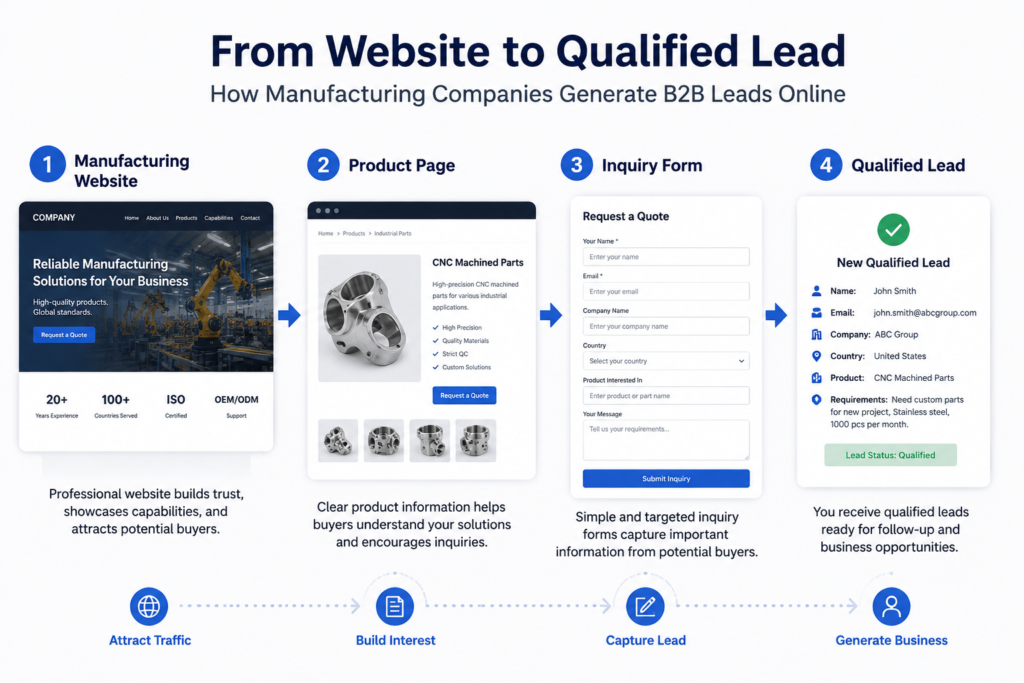
SEO is one of the best long-term lead generation strategies for manufacturers.
Instead of targeting only broad keywords, focus on buyer-intent keywords such as:
These searches usually come from people who are already looking for suppliers.
You should also publish useful articles answering questions potential customers search before purchasing.
Examples include:
How to Choose a Reliable Manufacturer
OEM vs ODM: What Is the Difference?
How to Evaluate an Overseas Supplier
For more information about improving search visibility, you can refer to the Google Search Central SEO Starter Guide.
SEO takes time, while paid advertising can help manufacturers reach buyers faster.
Google Ads works particularly well when customers are already searching for a manufacturer or supplier.
Meta Ads can help manufacturers introduce products and capabilities to potential customers in new markets.
LinkedIn can be useful for reaching specific business decision-makers such as:
The key is to avoid advertising only your factory.
Instead of saying:
“Professional Manufacturer with 15 Years of Experience”
focus on what the buyer needs:
“Looking for a Reliable OEM Supplier for Your Next Project?”
Buyer-focused advertising usually creates stronger interest.
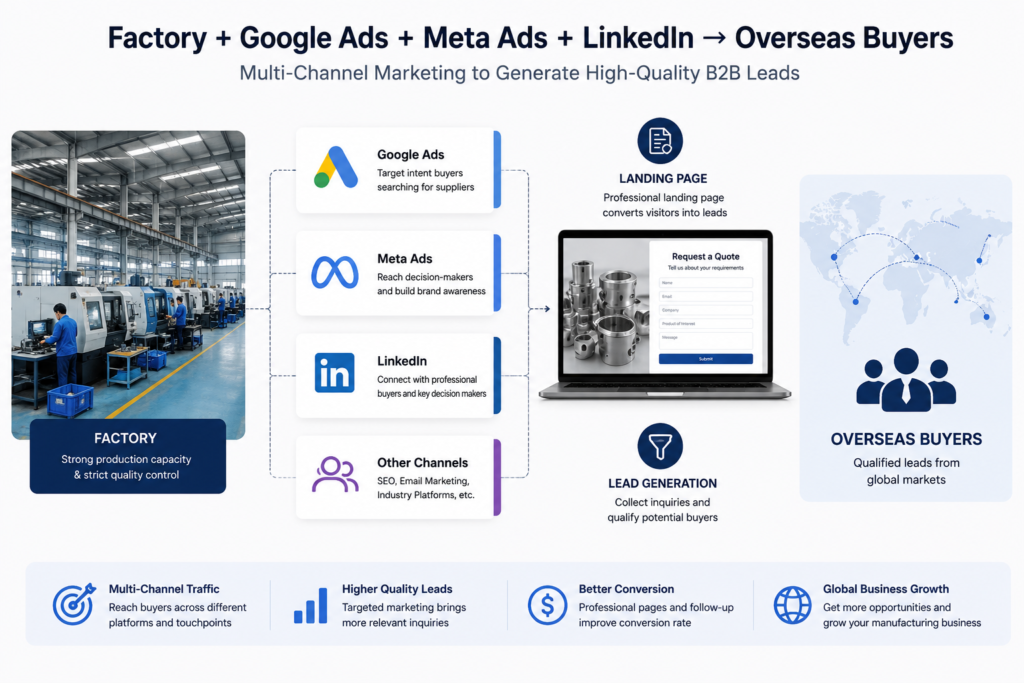
One common mistake manufacturers make is sending all advertising traffic to their homepage.
Instead, create dedicated landing pages for different products or markets.
A good B2B landing page should contain:
The page should give buyers enough confidence to contact your company.
You can also learn more about building a complete acquisition system in our B2B Digital Marketing Strategy guide.
B2B buyers want evidence that your company can actually deliver.
Instead of simply saying:
“High Quality”
“Professional Factory”
“Competitive Price”
show real examples of your work.
A case study can explain:
This makes it easier for potential buyers to trust your capabilities.
You can see an example in our Manufacturing Marketing Case Study.
Generating an inquiry is only the beginning.
Once a potential buyer contacts you, your sales team should quickly identify:
Using a CRM can also help organize inquiries and follow-ups.
For more information about lead generation and nurturing, you can refer to the HubSpot Lead Generation Guide.
Manufacturers should not judge marketing performance only by website visits or the total number of inquiries.
The most important metrics include:
For example, 20 qualified inquiries from genuine buyers can be much more valuable than 200 low-quality leads.
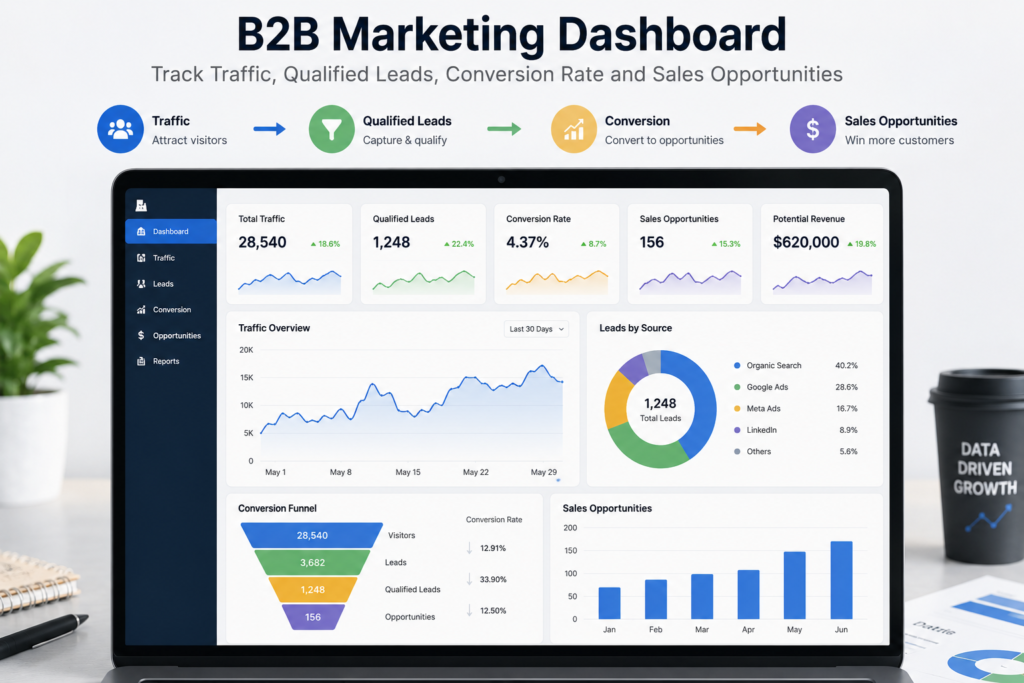
The best way to generate B2B leads for manufacturing companies is to build a complete digital acquisition system.
Start by identifying your ideal buyers, then use a professional website, SEO, Google Ads, Meta Ads, LinkedIn, landing pages, and useful content to attract them.
Most importantly, focus on qualified leads rather than simply generating more inquiries.
When marketing, website conversion, and sales follow-up work together, manufacturers can create a more predictable way to reach overseas buyers and grow internationally.