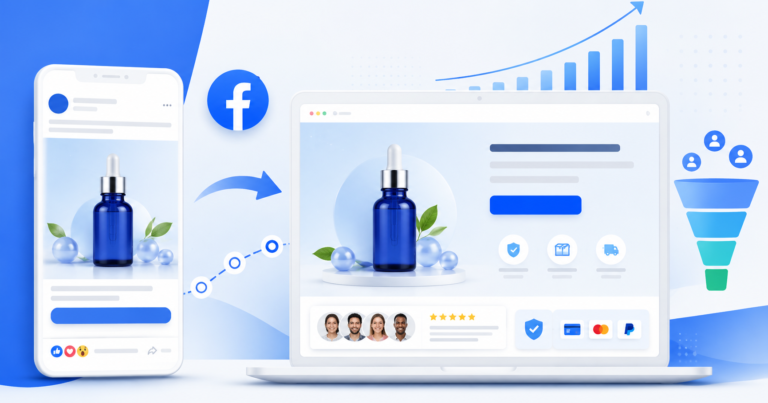




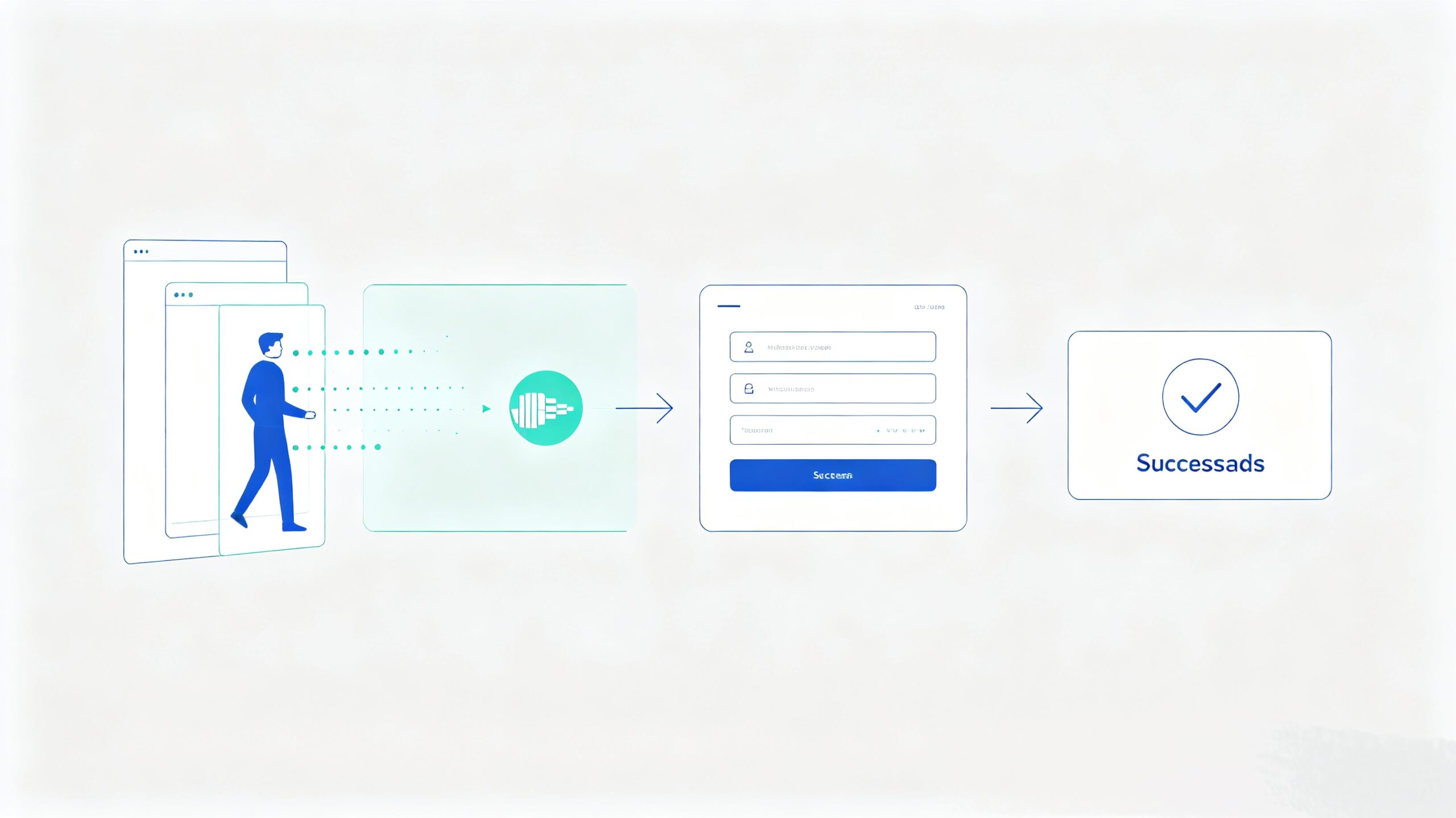
Building a beautiful website is no longer enough. Every visitor represents a potential customer, but without the right structure, messaging, and user experience, even thousands of visitors may leave without taking action.
A high converting website is designed with one goal in mind: turning traffic into qualified leads and paying customers.
Whether you’re a B2B manufacturer, service provider, or eCommerce brand, improving your website’s conversion rate is one of the most effective ways to grow your business without increasing advertising costs.
A high converting website encourages visitors to complete a desired action.
This action may include:
Unlike traditional websites that focus only on appearance, a high converting website is built around user behavior and business goals.
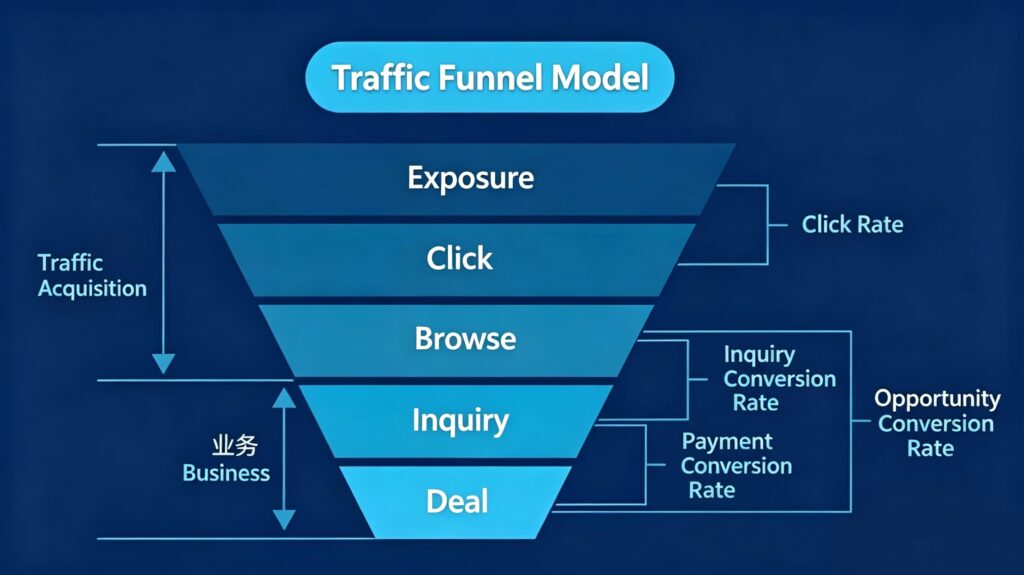
Many businesses believe increasing website traffic automatically leads to more sales.
This is one of the biggest misconceptions in digital marketing.
Consider this example:
Website A
Website B
Although Website B has less traffic, it generates twice as many leads because it converts visitors more effectively.
Increasing conversion rates often delivers a better return on investment than simply spending more on advertising.
Reference Google’s SEO and website experience recommendations:
Visitors should immediately understand:
Your homepage should communicate this within the first five seconds.
Your headline should solve a problem rather than describe your company.
Instead of:
Welcome to Our Company
Use:
Generate More Qualified Leads With Data-Driven Marketing
Every important page should have one primary CTA.
Examples include:
Avoid overwhelming users with too many competing buttons.
People trust other customers more than marketing copy.
Include:
Trust increases conversion.
Examples include:
A slow website loses visitors quickly.
Optimize:
More than half of global website traffic now comes from mobile devices.
A responsive design is no longer optional.
Only request essential information.
Long forms typically reduce conversions.
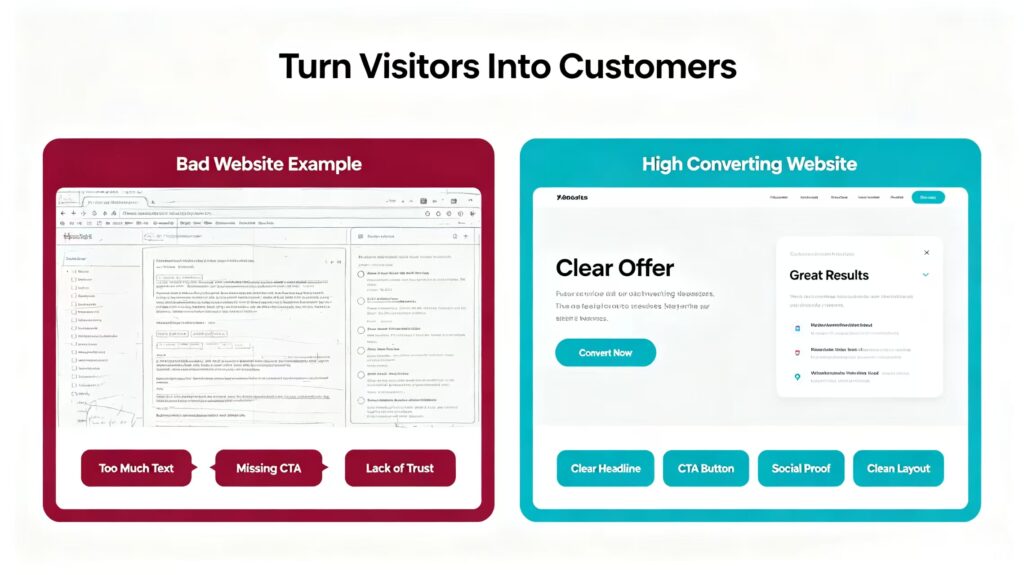
Many businesses unknowingly reduce their conversion rates by making avoidable mistakes.
Common issues include:
Fixing these issues can significantly improve website performance.
Conversion Rate Optimization (CRO) focuses on improving the percentage of visitors who take action.
Rather than increasing traffic, CRO improves the effectiveness of your existing traffic.
Popular CRO techniques include:
👉 Read our complete guide:
Track these key metrics:
Monitoring these KPIs allows continuous optimization.
For website performance measurement and analytics:
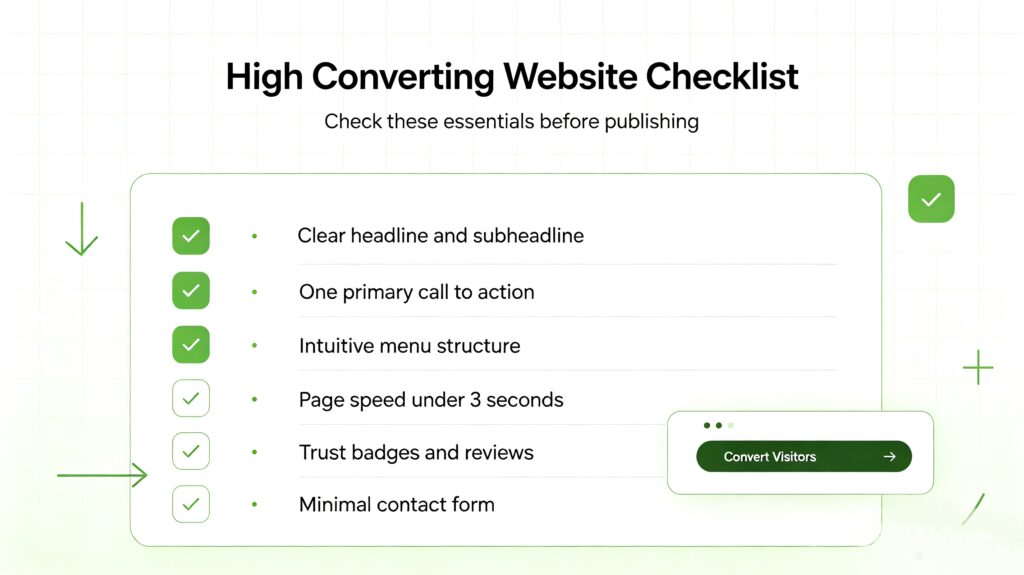
Before launching your website, ask yourself:
✔ Clear headline
✔ One primary CTA
✔ Fast loading speed
✔ Mobile responsive
✔ Social proof
✔ Trust badges
✔ Contact information visible
✔ Optimized landing pages
✔ SEO-friendly structure
✔ Internal linking
This checklist provides a strong foundation for improving both user experience and conversion rates.
A high converting website isn’t built by chance. It’s the result of understanding user behavior, optimizing every touchpoint, and continuously improving based on data.
Whether you’re looking to generate more B2B leads, increase online sales, or improve the ROI of your advertising campaigns, investing in website conversion optimization is one of the smartest long-term strategies.
Small improvements in conversion rate can produce significant business growth over time.
👉 Interested in generating more qualified leads?
Read our guide: