




In today’s competitive business environment, having a strong digital presence is no longer optional.
Customers increasingly rely on search engines, websites, social media, and online content when researching products and services. Businesses that fail to build effective digital marketing systems may lose valuable opportunities to competitors.
A successful Digital Marketing Strategy helps companies attract the right audience, generate qualified leads, and create sustainable business growth.
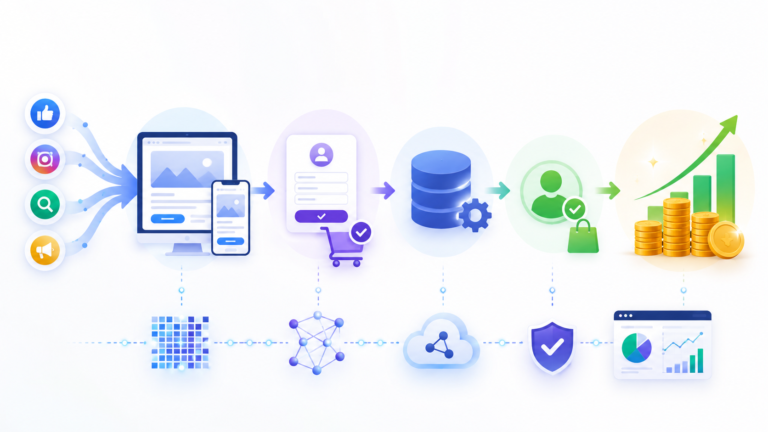
Instead of relying only on traditional sales methods, modern businesses combine SEO, paid advertising, content marketing, social media, and data analytics to build predictable customer acquisition systems.
This guide explains the key elements of a successful digital marketing strategy and how businesses can use digital channels to achieve long-term growth.
A digital marketing strategy is a structured plan that uses online channels and digital technologies to promote products, attract customers, and achieve business goals.
Unlike traditional marketing, digital marketing allows companies to:
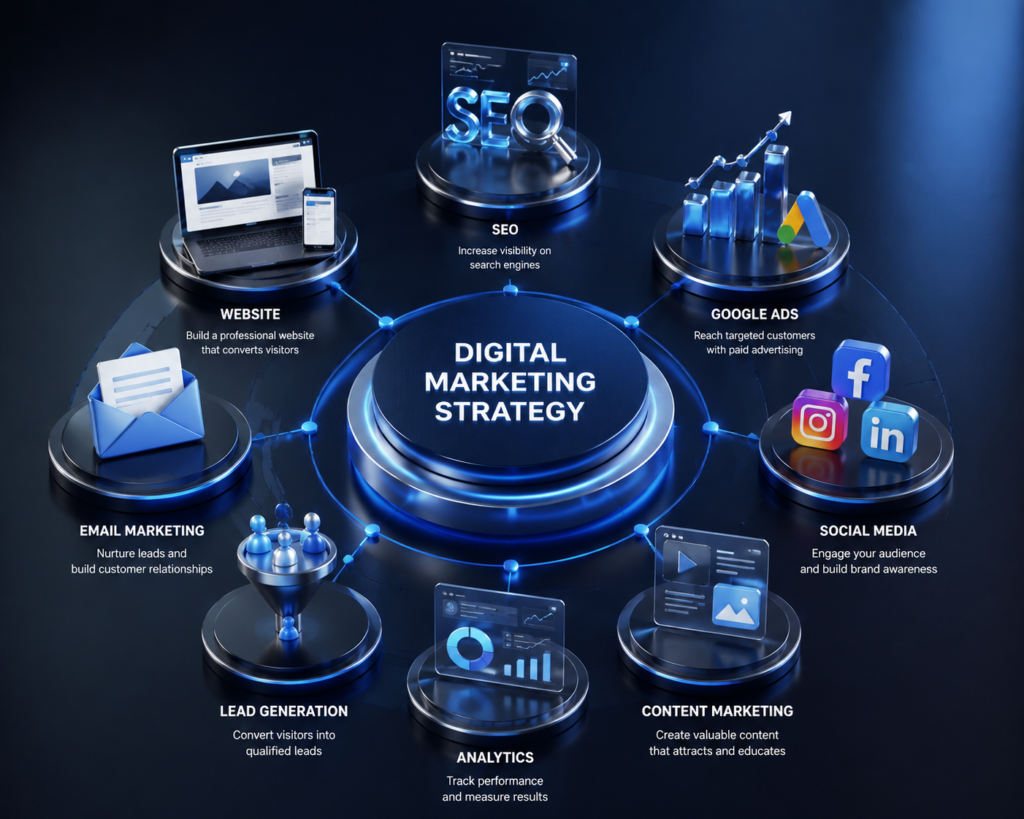
A complete digital marketing strategy usually includes:
The goal is not simply to generate website traffic.
The goal is to attract the right customers and convert them into valuable business opportunities.
Many businesses struggle with customer acquisition because they lack a clear online growth system.
Common challenges include:
A well-designed digital marketing strategy helps businesses solve these problems.
A professional website is the foundation of digital marketing.
Your website should:
For B2B companies and manufacturers, a website is often the first step in building relationships with global buyers.
A successful digital marketing strategy starts with a professional High Converting Website that turns visitors into potential customers.
SEO helps businesses improve their visibility on search engines and attract customers who are actively searching for solutions.
A strong SEO strategy includes:
For businesses, SEO creates long-term organic traffic and helps reduce dependence on paid advertising.
Paid advertising allows companies to reach potential customers quickly.
Popular platforms include:
Paid marketing is effective because businesses can target audiences based on:
However, successful paid advertising requires:
Content marketing helps businesses educate customers and build credibility.
Examples include:
High-quality content supports SEO, improves brand authority, and helps customers make purchasing decisions.
Social media allows businesses to connect with audiences and increase brand awareness.
Different platforms serve different purposes:
Suitable for:
Suitable for:
Suitable for:
Before creating campaigns, businesses need to understand:
A clear customer profile improves marketing efficiency.
Different businesses require different strategies.
For example:
B2B manufacturers may focus on:
E-commerce businesses may focus on:
Choosing the right channels helps businesses maximize marketing ROI.
Content builds trust before customers make purchasing decisions.
Effective content includes:
Content also improves search rankings and supports lead generation.
Data is essential for improving marketing results.
Important metrics include:
Businesses should continuously analyze data and improve campaigns.
B2B companies often require a different approach compared with consumer businesses.
A successful B2B digital marketing strategy focuses on:
Important channels include:
SEO helps businesses appear when potential buyers search for solutions.
B2B buyers often evaluate companies through their websites before contacting sales teams.
Digital marketing should connect traffic with sales opportunities.
A complete B2B digital marketing strategy should include a strong Lead Generation system that converts online visitors into business opportunities.
A digital marketing strategy should always be measured by data.
Key performance indicators include:
Shows whether more customers are discovering your business.
Measures whether marketing activities create business opportunities.
Shows how effectively your website converts visitors.
Helps businesses understand whether their investment creates value.

Digital marketing continues to evolve with new technologies.
Future trends include:
Businesses that adapt quickly will have stronger advantages in competitive markets.
Following guidelines from Google Search Central helps businesses improve website visibility and search performance.
Businesses can use tools like Google Analytics to measure traffic sources, user behavior, and marketing performance.

A successful Digital Marketing Strategy helps businesses move from traditional marketing methods to a predictable and scalable growth system.
By combining SEO, paid advertising, content marketing, social media, website optimization, and analytics, companies can attract more customers and build stronger market positions.
For manufacturers, exporters, and B2B companies, digital marketing provides new opportunities to reach global markets and generate sustainable business growth.