




Digital transformation has become a key strategy for businesses that want to remain competitive in today’s rapidly changing market.
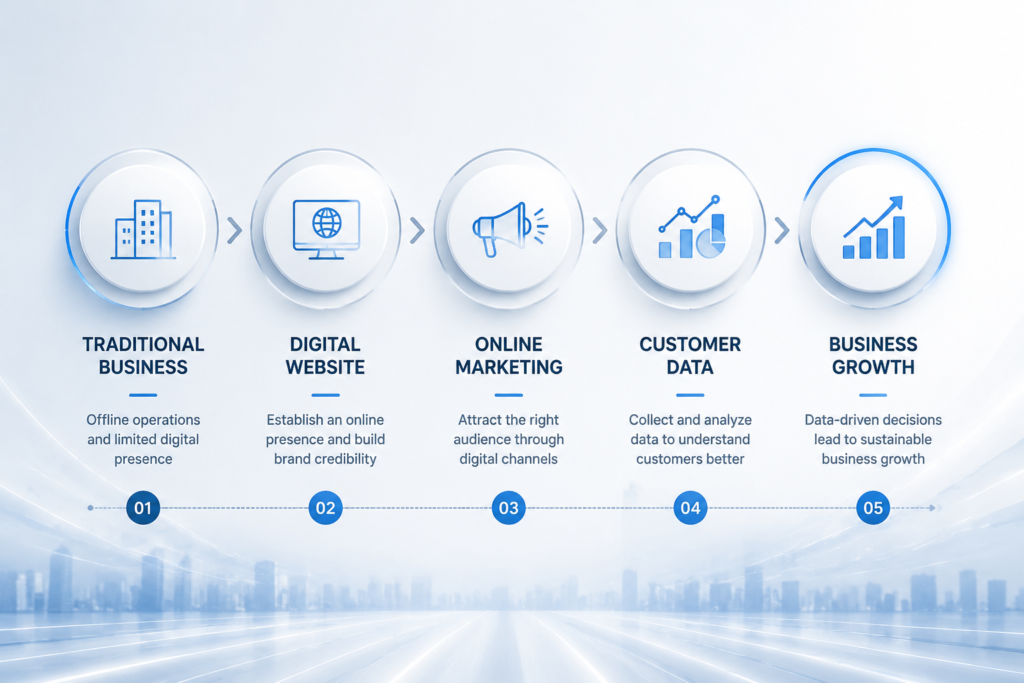
Companies are no longer relying only on traditional sales methods, offline marketing, and manual processes. Instead, businesses are adopting digital technologies to improve efficiency, attract customers, and create sustainable growth.
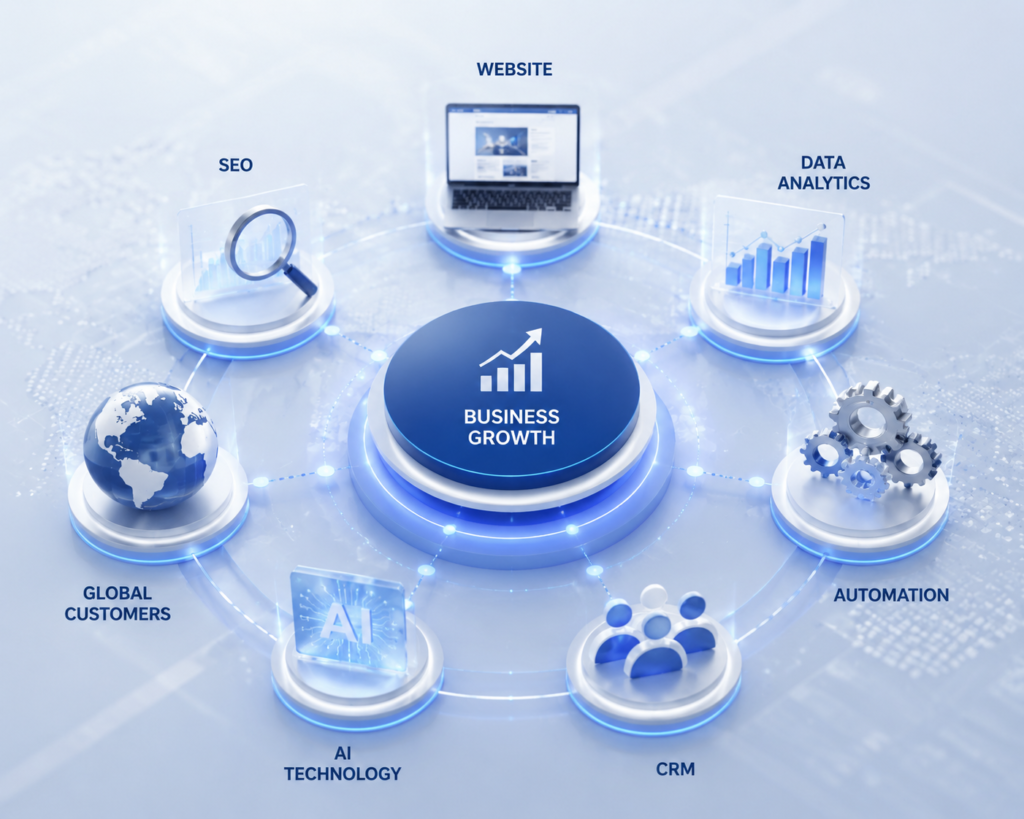
From professional websites and online marketing to automation and data-driven decision-making, digital transformation helps companies build stronger business systems and adapt to new market opportunities.
This guide explains what digital transformation means, why it matters, and how businesses can successfully implement digital strategies for long-term growth.
Digital transformation is the process of using digital technologies to improve how a business operates, communicates with customers, and creates value.
It is not simply about using new software or creating a website.
A successful digital transformation strategy involves changing the way companies:
For modern businesses, digital transformation connects technology, marketing, sales, and customer relationships into one integrated system.
Many traditional businesses face challenges such as:
Digital transformation helps companies solve these challenges by creating more efficient and measurable business systems.
Key benefits include:
Digital platforms allow businesses to connect with customers worldwide.
A professional online presence enables companies to:
For manufacturers and exporters, digital transformation creates new opportunities beyond traditional trade channels.
Modern customers often search online before making purchasing decisions.
Businesses need digital channels such as:
Digital transformation allows companies to build more effective customer acquisition systems through online channels and Lead Generation strategies.
Digital tools help companies reduce repetitive tasks and improve productivity.
Examples include:
These technologies allow teams to make faster decisions based on real business data.
A company’s website is often the first interaction between a business and potential customers.
A modern business website should:
A website is no longer just an online brochure.
It should become a powerful business growth tool.
Companies should focus on building a High Converting Website that turns visitors into qualified business opportunities.
Data is one of the most valuable resources in digital transformation.
Businesses can use data to understand:
With accurate data, companies can improve marketing decisions and allocate resources more effectively.
Automation and artificial intelligence are becoming important parts of digital transformation.
Businesses can use AI and automation for:
These technologies help companies save time and focus on strategic growth.
Many small and medium businesses believe digital transformation requires large investments.
However, companies can start with simple improvements.
Businesses should first build a strong digital foundation:
This helps customers discover the company online.
A complete digital marketing system helps businesses attract and convert customers.
Important channels include:
These channels work together to create a predictable customer acquisition process.
Businesses should regularly analyze:
Data allows companies to identify opportunities and improve performance.
Although digital transformation provides many benefits, businesses may face challenges.
Common problems include:
Many companies adopt technology without a clear business goal.
A successful transformation requires:
Companies may need additional expertise in:
Working with experienced digital partners can help businesses accelerate transformation.
Businesses should track measurable outcomes such as:
Digital transformation will continue shaping how companies compete in global markets.
Future business growth will depend on:
Companies that adapt faster will have stronger advantages in competitive industries.

Leading technology companies such as Microsoft provide digital transformation solutions that help organizations improve productivity and customer experiences.
Businesses can use tools like Google Analytics to understand customer behavior and measure digital marketing performance.
Digital transformation is no longer optional for businesses that want sustainable growth.
By combining professional websites, digital marketing, automation, and data-driven strategies, companies can improve efficiency and attract more customers in global markets.
For manufacturers, exporters, and B2B companies, building a strong digital foundation is one of the most effective ways to achieve long-term business growth.