




Growing a small business is exciting, but scaling it successfully requires more than simply increasing sales.
Many businesses reach a point where revenue grows, but operations become inefficient, marketing costs increase, and customer acquisition slows down. Sustainable growth comes from building systems that allow your business to handle more customers without sacrificing quality or profitability.
In this guide, you’ll learn eight proven strategies to help your small business grow efficiently while attracting more qualified customers.
Growth and scaling are often used interchangeably, but they are not the same.
Growth usually means increasing revenue by adding more resources, such as hiring more employees or spending more on advertising.
Scaling means increasing revenue while improving efficiency. A scalable business can serve more customers without increasing costs at the same rate.
Examples of scalable improvements include:
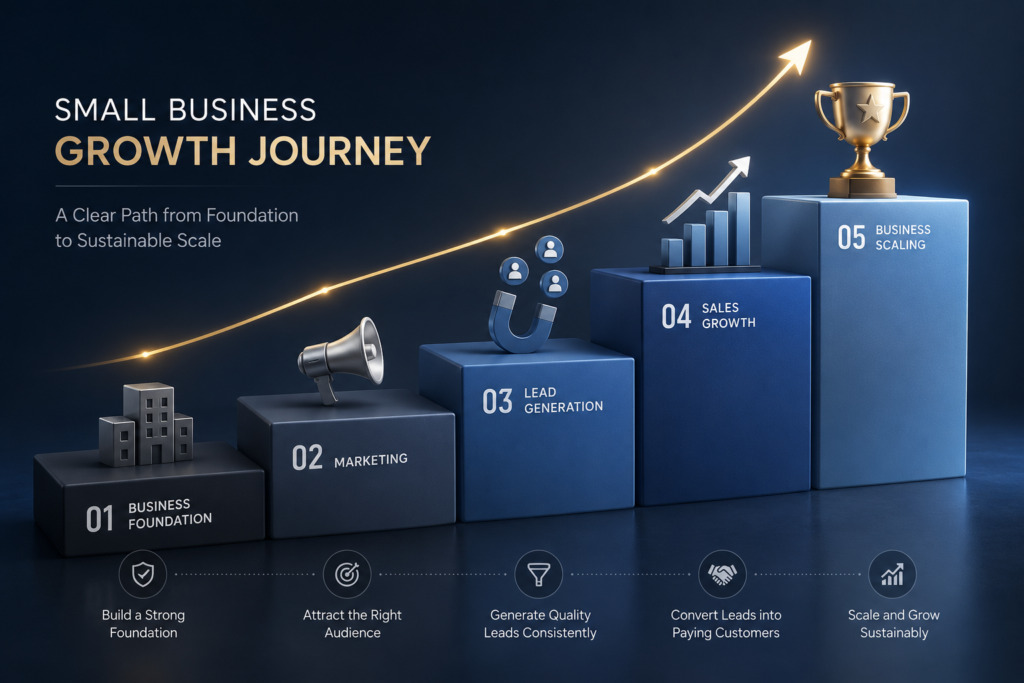
Scaling starts with a clear plan.
Define:
A focused strategy prevents wasted time and resources.
Digital marketing helps small businesses reach new customers consistently.
Focus on channels that match your audience, including:
Rather than relying on one channel, combine multiple channels to create a predictable lead generation system.
Learn how to build a complete B2B Digital Marketing Strategy to generate more qualified leads.
Your website should do more than introduce your business.
It should:
A high-converting website allows every marketing campaign to perform better.
Learn how to improve your website in our guide to High Converting Website.
Instead of waiting for referrals, create predictable ways to attract new customers.
Effective lead generation methods include:
The goal is to generate qualified leads consistently rather than relying on occasional inquiries.
Automation helps your team focus on high-value work.
Consider automating:
Even small automations can save significant time as your business grows.
Track performance regularly.
Important KPIs include:
Making decisions based on data helps you scale more efficiently.
Learn more about measuring website performance with Google Analytics.
Acquiring new customers is important, but retaining existing customers is often more profitable.
Improve customer retention by:
Satisfied customers often become repeat buyers and referral sources.
Scaling is an ongoing process.
Regularly review:
Small improvements made consistently often produce significant long-term results.
Explore small business growth resources from the U.S. Small Business Administration (SBA)
Many businesses grow too quickly without building the right systems.
Common mistakes include:
Avoiding these mistakes creates a stronger foundation for sustainable growth.
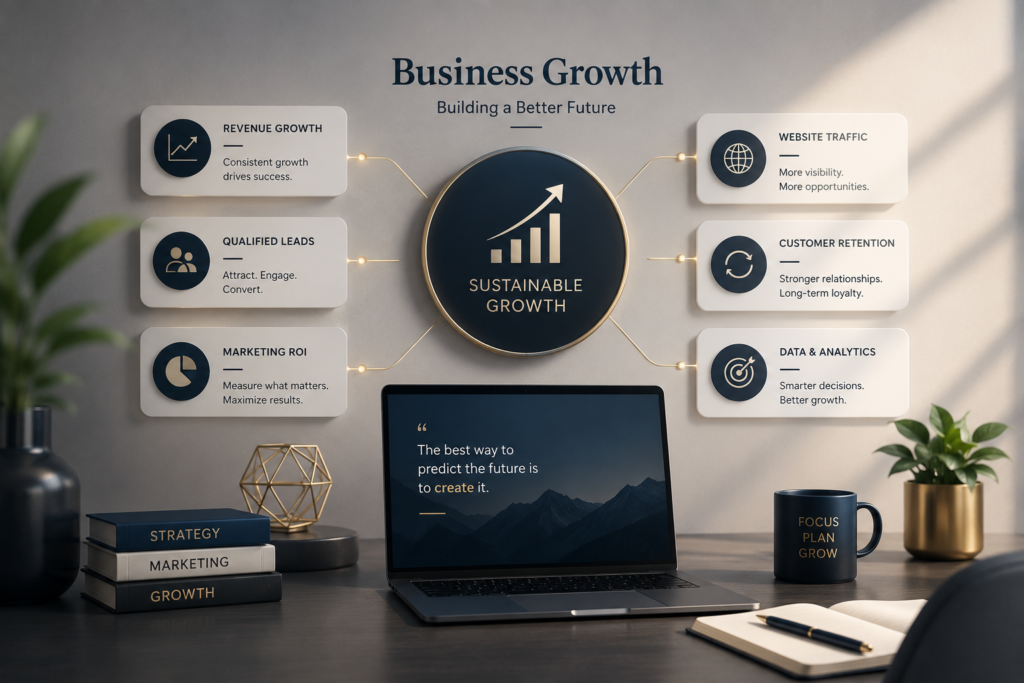
Scaling a small business is not about working harder—it is about building smarter systems.
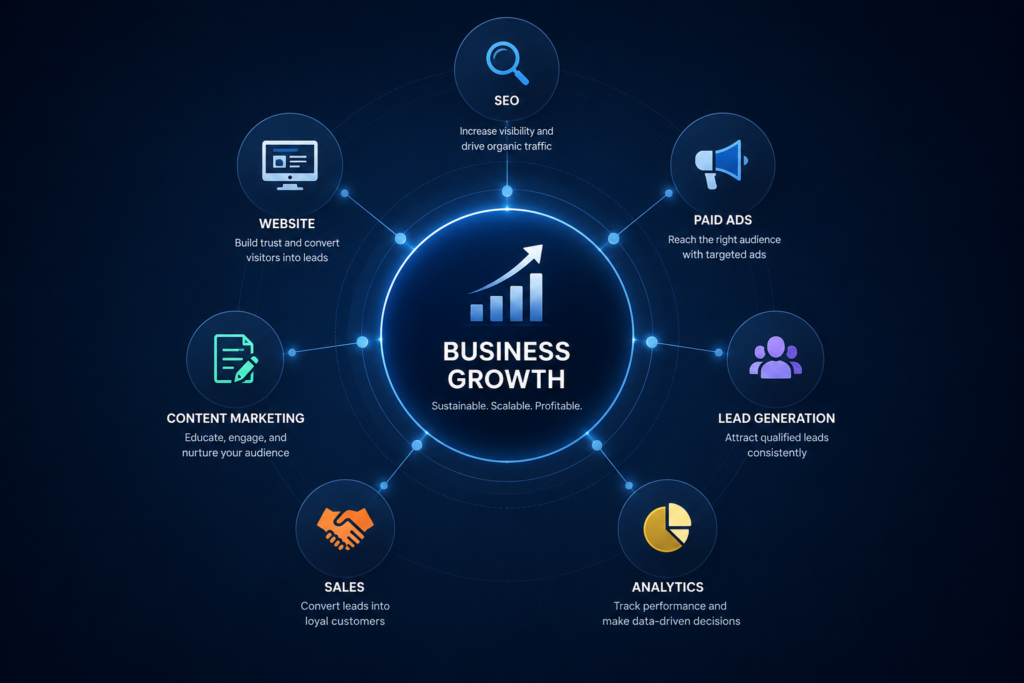
By combining digital marketing, lead generation, website optimization, automation, and data-driven decision-making, your business can grow sustainably while attracting more qualified customers.
The most successful businesses focus on creating repeatable processes that continue generating value as they expand.
At Haolink, we help small businesses build scalable growth systems through digital marketing, SEO, lead generation, website optimization, and conversion-focused strategies.