





The Complete Guide to Content Marketing for B2B Companies: Strategies, Best Practices & Lead Generation
In today’s competitive B2B market, buyers rarely make purchasing decisions after seeing a single advertisement. Instead, they research solutions, compare providers, read educational articles, and evaluate a company’s expertise before making contact.
This is why content marketing has become one of the most effective long-term strategies for B2B companies.
A well-planned content marketing strategy helps businesses attract qualified traffic, build credibility, improve search engine rankings, and generate consistent leads without relying entirely on paid advertising.
B2B content marketing is the process of creating valuable, educational, and relevant content that helps businesses attract and convert other businesses into customers.
Unlike B2C marketing, which often focuses on emotional purchasing decisions, B2B buyers typically conduct extensive research before contacting a supplier or service provider.
Effective B2B content can include:
The goal isn’t simply to generate website traffic—it is to educate potential buyers and build trust throughout the purchasing journey.
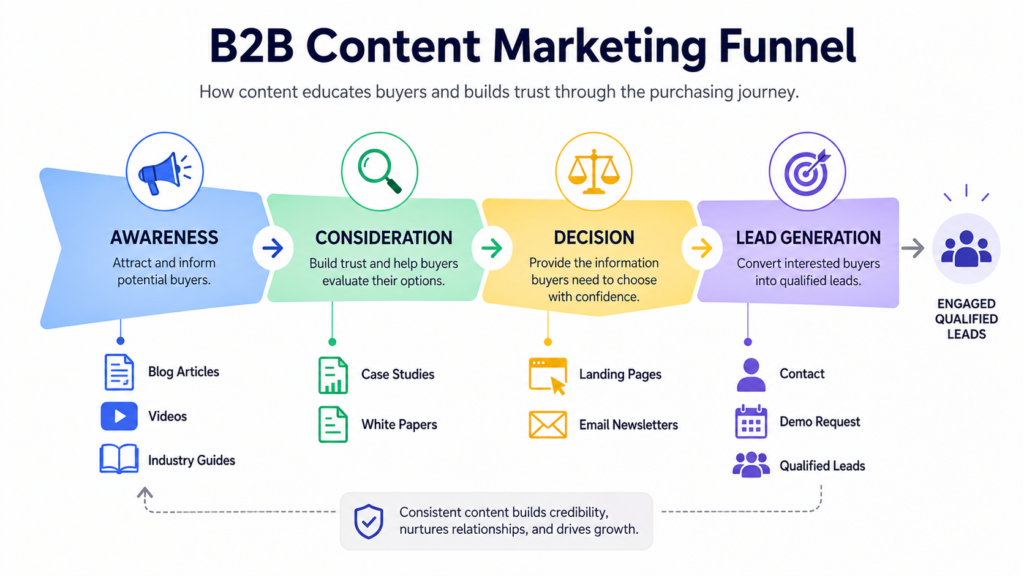
Modern buyers spend significant time researching online before speaking with a sales representative.
A strong content strategy helps your business:
A successful strategy starts with understanding your audience rather than simply publishing random blog posts.
Ask yourself:
Creating content around real customer questions will generate far better results than writing only about your products.

Your content should target keywords with both search demand and commercial intent.
Examples include:
Publishing multiple related articles also helps build topical authority over time.
Rather than focusing on sales, focus on solving problems.
Useful content includes:
Google increasingly rewards websites that demonstrate experience, expertise, authority, and trustworthiness.
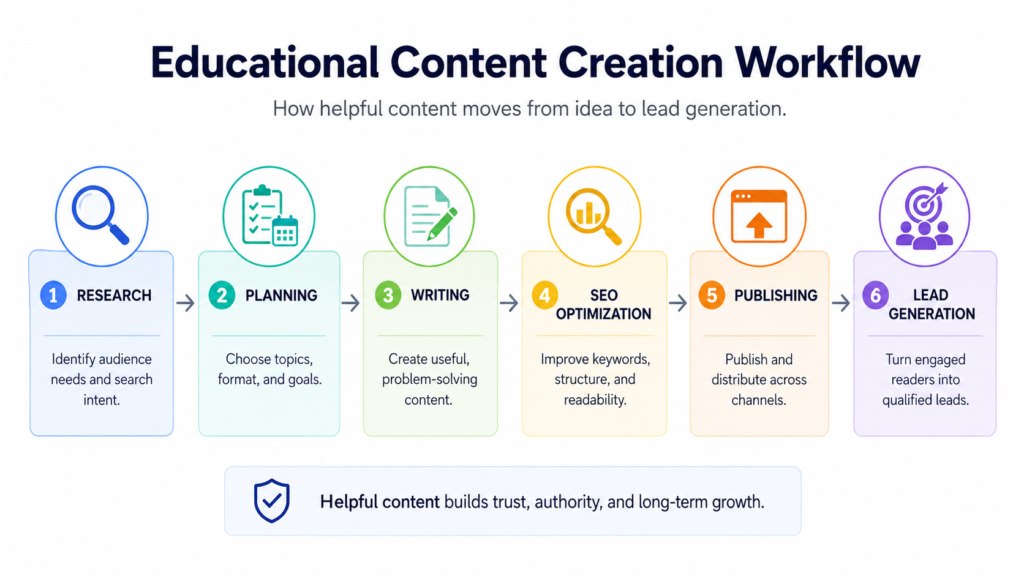
Successful B2B companies typically follow several best practices.
Publishing one article every few months is unlikely to produce meaningful SEO results.
Aim for a consistent publishing schedule, such as one or two high-quality articles per week.
Each article should include:
Make your content easy to read by using:
Content marketing works because it attracts potential buyers at every stage of the buying journey.
For example:

Track key performance indicators such as:
Monitoring these metrics helps identify which content contributes most to business growth.
Many companies struggle with content marketing because they:
Avoiding these mistakes can significantly improve long-term performance.
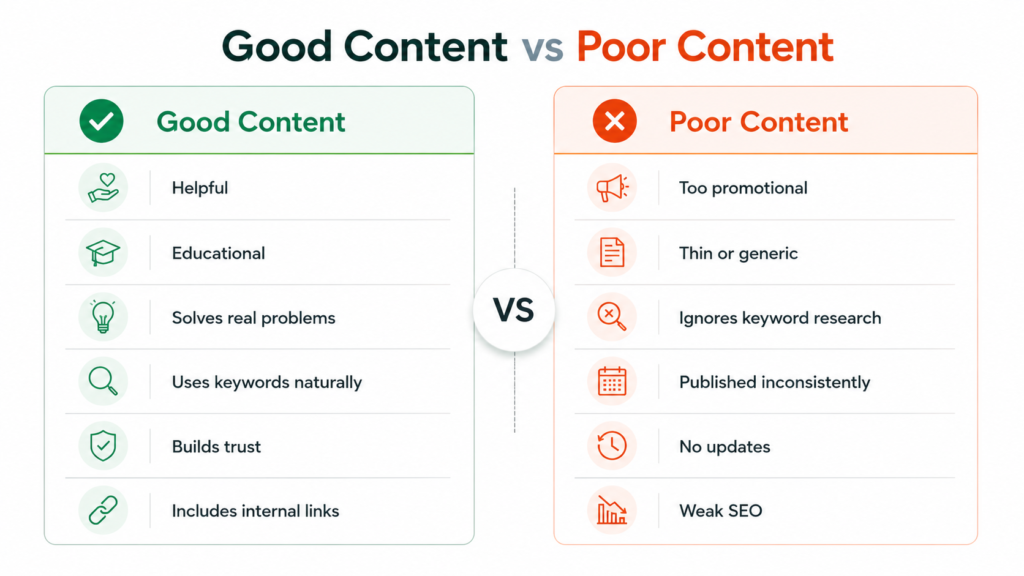
Content marketing is no longer optional for B2B companies competing online.
Businesses that consistently publish valuable, search-optimized content can improve visibility, attract qualified prospects, and establish lasting authority in their industries.
Whether you’re a manufacturer, service provider, or growing brand, investing in high-quality content today will continue generating traffic and leads long into the future.